The Interim Period Is Where Utah Policy Gets Made. Is Your Organization at the Table?
Every January, Utahns watch the Legislature convene, bills move, and laws change. What they don't see is the quieter season that preceded it — the months of committee hearings, staff research, stakeholder testimony, and careful negotiation that determined what those bills said before they were ever filed. That season is called the Interim. And it starts this month.
The Utah Legislature's Office of Legislative Research and General Counsel has released the proposed 2026 Interim Study Items. Thirteen committees. More than 80 study items. Months of hearings before a single bill is drafted. This is where the work happens. This is where the people who show up shape what the people who don't show up have to live with.
At Do Good, we read every page. Here is what we found — and what it means for the organizations we serve.
Business and Labor | Sen. Evan J. Vickers and Rep. A. Cory Maloy
Utah homeowners are watching their insurance premiums climb as major carriers quietly retreat from wildfire-exposed western markets. This committee will study whether Utah should establish a state-backed high-risk insurance pool or a home mitigation grant program. That is a consequential policy decision. It will be shaped by whoever shows up to inform it.
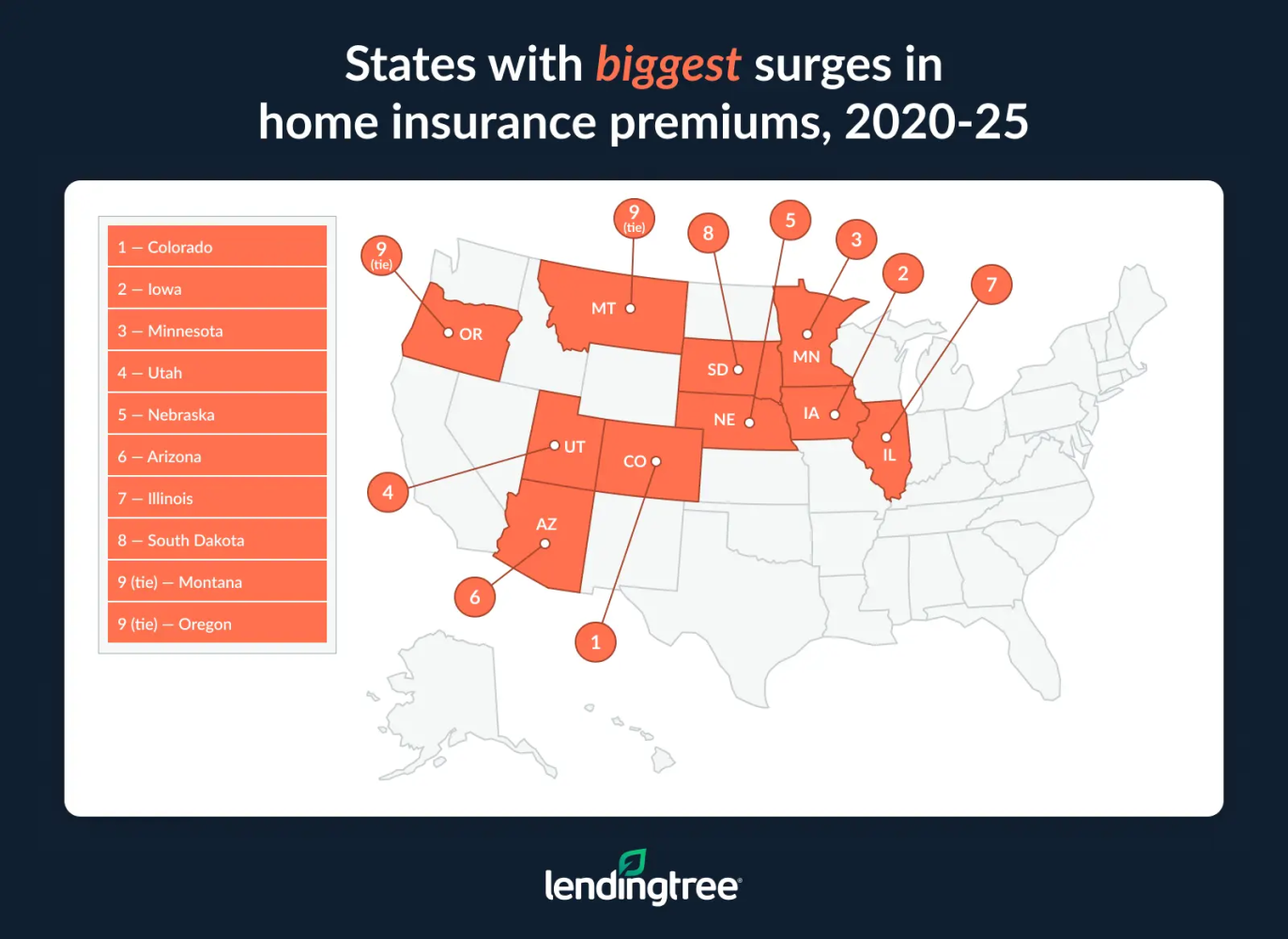
LendingTree's analysis showed Utah had a 77.2% increase in homeowner insurance since 2020. Source: 2026 Home Insurance Stability Report
LendingTree's analysis showed Utah had a 77.2% increase in homeowner insurance since 2020. Source: 2026 Home Insurance Stability Report
Other items: currency availability and penny shortages; employment non-competition clauses; healthcare consumer safety at medical spas and wellness clinics; insurance market trends across property, casualty, and health lines; the Office of AI Policy; professional licensing coordination and regulations; property management oversight; radon and asbestos mitigation licensing; real estate wire fraud; and trust company regulations.
Economic Development and Workforce Services | Sen. Ann Millner and Rep. Jon Hawkins
Utah's economy is growing. Its workforce pipeline is not keeping pace. Employers in construction, healthcare, technology, and the trades are competing for workers who aren't there. This committee's workforce study — examining apprenticeships, AI training programs, and workforce Pell grants — is perhaps the most consequential economic development conversation happening in Utah government this year. The organizations that engage it seriously will help write the answer.
Other items: a GOED (GOEO) strategic framework and program effectiveness review; a Nucleus Institute presentation on the Innovation District at The Point; a proposed Utah Quantum 2030 Task Force; a State Location Privacy Act; and a TANF funding review.
Education | Sen. John D. Johnson and Rep. R. Neil Walter
Utah needs more pathways to the middle class. The question this committee will examine — whether outcome-based, income-linked workforce investment can scale across the state — is really a question about whether Utah is serious about closing the opportunity gaps that determine which families move up and which ones don't. Raj Chetty's research is unambiguous: where a child grows up, and the economic trajectory of their parents, are among the strongest predictors of adult earnings. But that inheritance is not destiny. SB 324 applies that insight directly. It requires grant applicants to submit pre-analysis plans identifying expected outcomes before a dollar is spent, mandates independent evaluation, and ties repayment to measurable results — earnings, wage growth, credential completion, labor market attachment. The state only pays for what works. That is not charity. It is the same growth-focused investment logic Utah already applies to economic development, now applied to people. Done right, it gives Utah something it has never had: not a guess about which education and workforce investments work, but proof.
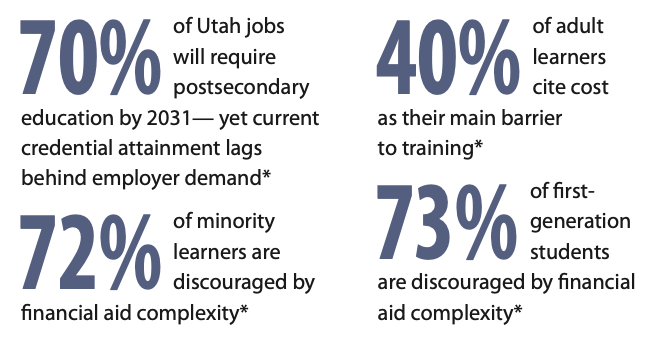
Sources: Utah’s Olympic Sized Opportunity, Gardner Policy Institute; Cicero Group, Western Governors University, and Utah System of Higher Education. “Non-Traditional Students in Utah.” April 2022.
Other items: AP credit versus concurrent enrollment alignment; business manager reporting structures; educator disciplinary action and due process; institutional neutrality and student clubs; K-12 and higher education workforce partnerships; legislative audits; mandated education program review; outcome-based investment grant pilots; civics education code; special education funding; arts education; USHE system redesign; and the USHE Campus Safety Task Force.
Government Operations | Sen. Ronald M. Winterton and Rep. Calvin Roberts
Synthetic video. AI-generated voiceovers. Digitally altered images in political advertising. These are not hypothetical concerns. They are happening now. This committee will examine what disclosure of AI use in political advertising should look like — a question that sits at the intersection of technology, democracy, and public trust. It deserves serious attention from anyone who cares about the integrity of civic life.
Other items: an ongoing review process for boards and commissions; Cooperative Contracts Fund reclassification; a comprehensive cost analysis of elections across counties and municipalities; and election integrity, security, and participation.
Health and Human Services | Sen. Keith Grover and Rep. Katy Hall
Recent federal legislation will reshape Utah's Medicaid program — community engagement requirements, provider tax changes, and more. The interim committee will examine what implementation looks like and what flexibility Utah retains. For healthcare providers, nonprofits, and the communities they serve, this is not a distant policy question. It is arriving soon, and preparation matters.
Other items: behavioral health capacity and opioid prevention; child health and welfare; healthcare access, cost, and anticompetitive practices; healthcare workforce and licensure; Utah State Hospital expansion; and sunset reviews.
Judiciary | Sen. Todd Weiler and Rep. Karianne Lisonbee
Utah is one of 19 states without an automated court date reminder system. The evidence from states that have implemented such systems is clear — failure-to-appear rates drop, court efficiency improves, and individuals avoid the cascading consequences of a missed date. Simple solutions to stubborn problems are rare in public policy. This is one of them. The committee has an opportunity to act.
Other items: attorney opinion letters in real estate escrow; child welfare case timelines; criminal fines and restitution; domestic relations commissioner authority; general provisions for the Utah Code; justice court closures; juvenile detention; statute of limitations for wage claims; and victims' services funding.
Law Enforcement and Criminal Justice | Sen. Calvin R. Musselman and Rep. Ryan D. Wilcox
The research on childhood trauma and juvenile justice involvement is not ambiguous. Children who experience significant adverse experiences are more likely to encounter the justice system. Utah statutes may not adequately account for that reality when juveniles are prosecuted, transferred to adult court, or sentenced. Getting this right is not just a matter of compassion. Intervention early is always less expensive than incarceration later. The organizations that bring that evidence to this committee will shape what happens next.
Other items: construction fraud; unlawful activity statute of limitations; registrable offenses; criminal justice audits; speedy trial evaluation; AP&P officer database access; DNA program funding; emerging law enforcement technologies; license plate readers; POST training facility needs; correctional facility standards; mental health and the insanity defense; domestic violence services; and the Victim Services Commission assessment.
Natural Resources, Agriculture, and Environment | Sen. Keven J. Stratton and Rep. Carl R. Albrecht
Water is Utah's is among Utah's most consequential long-term challenges. The committee's study — conducted in coordination with the Legislative Water Development Commission — spans 40-year demand planning, Colorado River obligations, Great Salt Lake restoration, groundwater protection, drought response, and supply augmentation. These are not separate conversations. They are one conversation. And the decisions made in this interim period will be felt for generations.
Other items: agricultural burns; animal depredation; aquaculture regulation; carbon credits on state and federal lands; food donations; native plants; mineral rights in property assessments; waste and recycling; rare earth elements; and emergency preparedness.
Political Subdivisions | Sen. Don L. Ipson and Rep. James A. Dunnigan
Tax increment financing is one of the most powerful tools available to Utah communities for neighborhood revitalization and economic development. It is also one of the most misunderstood. This committee — mandated by H.B. 507 to convene a TIF working group — will examine caps, return on investment, and how much property tax revenue is being deferred statewide. The organizations that bring rigorous data and honest perspective to that conversation will help determine whether TIF becomes more effective, more restricted, or something in between.
Other items: annexation; impact fees on small homes; municipal incorporation processes; roles and duties of local officials; planning for future growth; and public funds reporting.
Public Utilities, Energy, and Technology | Sen. Derrin R. Owens and Rep. Colin W. Jack
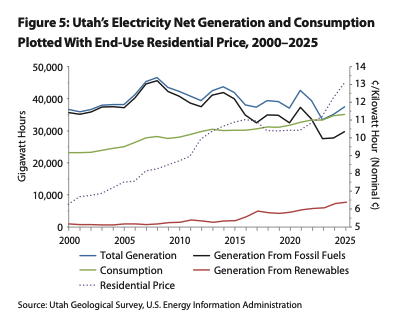
Utah's energy future is being negotiated right now — not in the abstract, but in committee rooms, in utility boardrooms, and in conversations about transmission lines, generation capacity, and rate structures. Rocky Mountain Power's potential separation from PacifiCorp. New producers looking to build in Utah. Long-term regional grid planning. These are not utility company problems. They are Utah problems. The organizations that engage this committee will help shape the energy landscape their communities live in.
Source: Utah’s 2025 Energy Landscape and Outlook for 2026 and Beyond By: Michael D. Vanden Berg, Energy and Minerals Program Manager, Utah Geological Survey
Other items: utility rate structures and governance; Rocky Mountain Power's Schedule 32 and 34; energy project financing barriers; rural Utah energy economic impact; and transmission and generation planning.
Retirement and Independent Entities | Sen. Wayne A. Harper and Rep. Cheryl K. Acton
Tens of thousands of Utah public employees hired after 2011 are enrolled in Tier 2 retirement. The committee will examine whether the current hybrid and 401(k)-only options are serving those employees well — and whether changes including cash-outs, annuity options, or mid-career plan flexibility should be considered. For public sector employers trying to recruit and retain good people, this conversation matters.
Other items: independent entities review; PEHP initiatives including GLP-1 pilots and IVF benefits; URS administrative cleanup; the AUREUS recordkeeping system launch; and URS annual financial report and contribution rates.
Revenue and Taxation | Sen. Daniel McCay and Rep. Steve Eliason
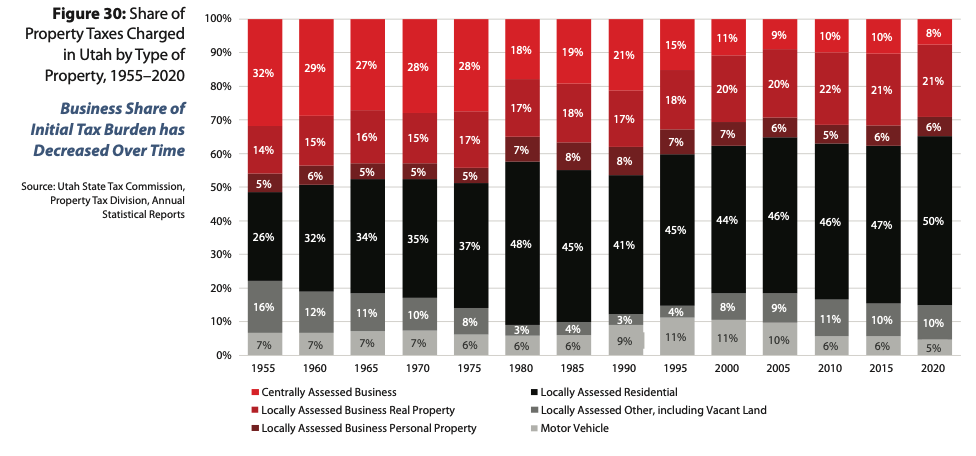
Property taxes are rising in communities across the Wasatch Front, and the people paying them want to know why and what their government is doing about it. This committee will examine property tax relief, truth in taxation, and tax notices — the mechanisms by which government communicates with citizens about what they owe and why. Transparency here is not optional. It is foundational.
Source: A Visual Guide to Tax Modernization in Utah, Understanding Property Taxes Kem C. Gardner Policy Institute, February 2022
Transportation | Sen. Wayne A. Harper and Rep. Kay J. Christofferson
How Utah moves people — not just cars — is a question that touches housing affordability, workforce access, and economic opportunity at the same time. The UTA governance update and human services transportation discussion will examine whether Utah's transit system is structured to serve the communities that need it most. That's a question worth asking out loud.
Other items: motorcycle safety; distracted driving; traffic flow; crosswalk timing; bridge condition; encroachment permits; the Lake Powell ferry; emissions testing; vehicle registration; commercial vehicle registration; electronic titling; and digital license plates.
What This Means for Your Organization
Policy is not made by the people with the best ideas. It is made by the people with the best ideas who showed up.
The interim period is the moment when showing up matters most. Before the bills are drafted. Before the positions harden. Before the session clock starts. This is when testimony shapes thinking, when relationships are built, and when the organizations that have done their homework earn the right to be heard.
Do Good exists for exactly this moment. We track these committees. We know the chairs, the staff, and the stakeholders. We translate complex policy landscapes into clear strategy. We help our clients show up prepared — with evidence, with relationships, and with a point of view worth listening to.
If your organization works in housing, workforce, economic development, healthcare, education, energy or community infrastructure — there is a committee on this list studying something that affects you. The question is whether you'll be in the room when it happens.
We'd be glad to help you get there.
Do Good LLC is a strategy, capital, and policy consulting firm. We work at the intersection of economic development, civic capital, and public policy to produce lasting impact for the communities we serve. Contact Michael Parker at michael@lets-do-good.org.