Q3: Forecast - Utah Is Powering On
Notes from the Utah Economic Council and Do Good’s September forecast
Two days ago, Do Good Principal Michael Parker joined some of Utah’s leading economists for the September meeting of the Utah Economic Council.
The discussion was lively, the disagreements were useful, and the purpose was straightforward: each forecaster brings an independent view, then the group tests the assumptions until the consensus is better than any one forecast that went into the room.
Do Good participates as a private-sector member, bringing experience across business, housing, economic development and philanthropy to the forecasting process.
The national story is loud. Utah’s is steadier.
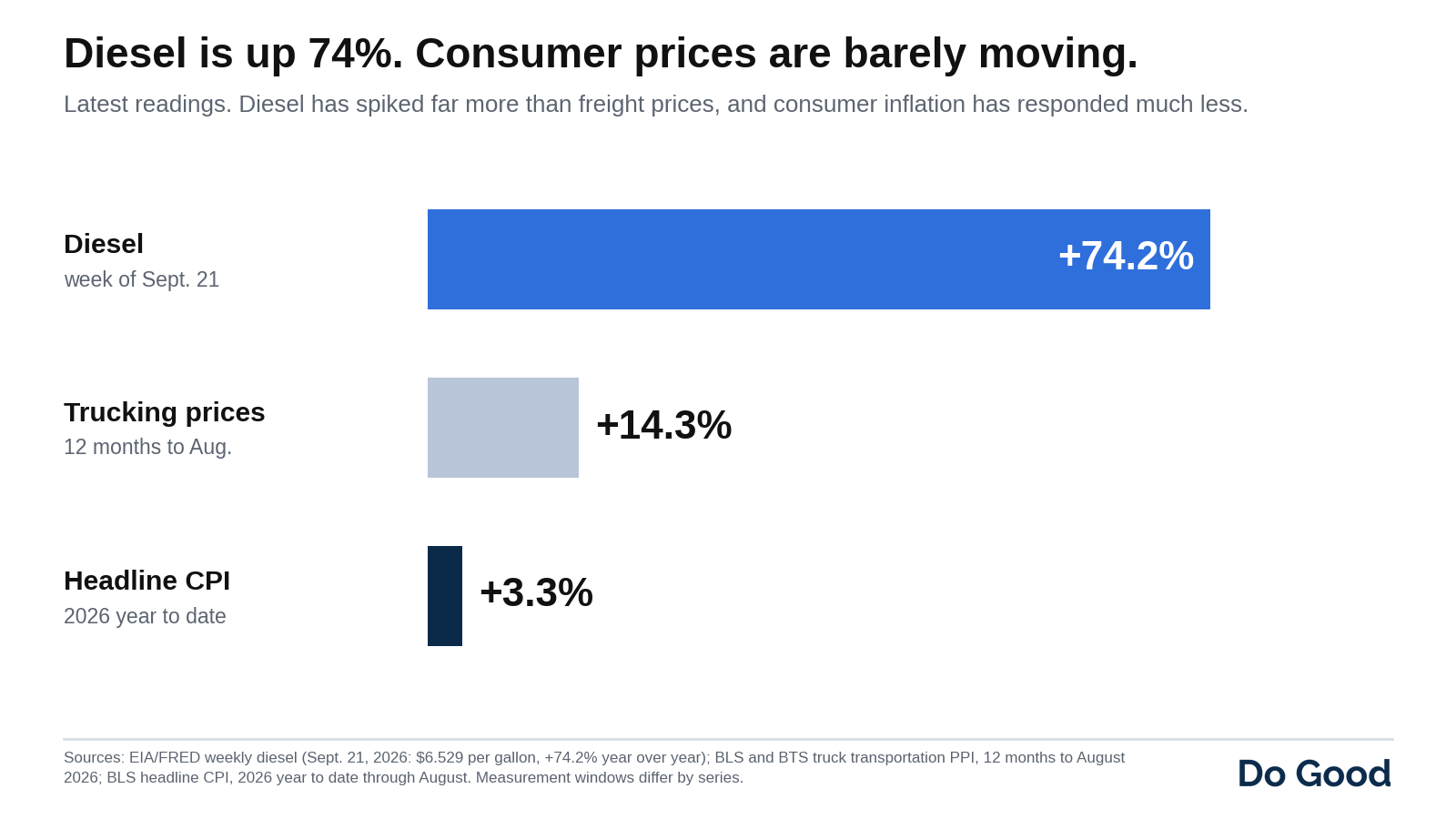
The Federal Reserve raised rates in September for the first time in three years. The war with Iran has disrupted global energy markets, and U.S. diesel peaked at $6.53 per gallon on Sept. 21 before easing to $6.38 on Sept. 28. Reuters
At the same time, long-term borrowing costs have continued rising, with the 10-year Treasury reaching 5.34%. Reuters
Yet Utah continues to expand.
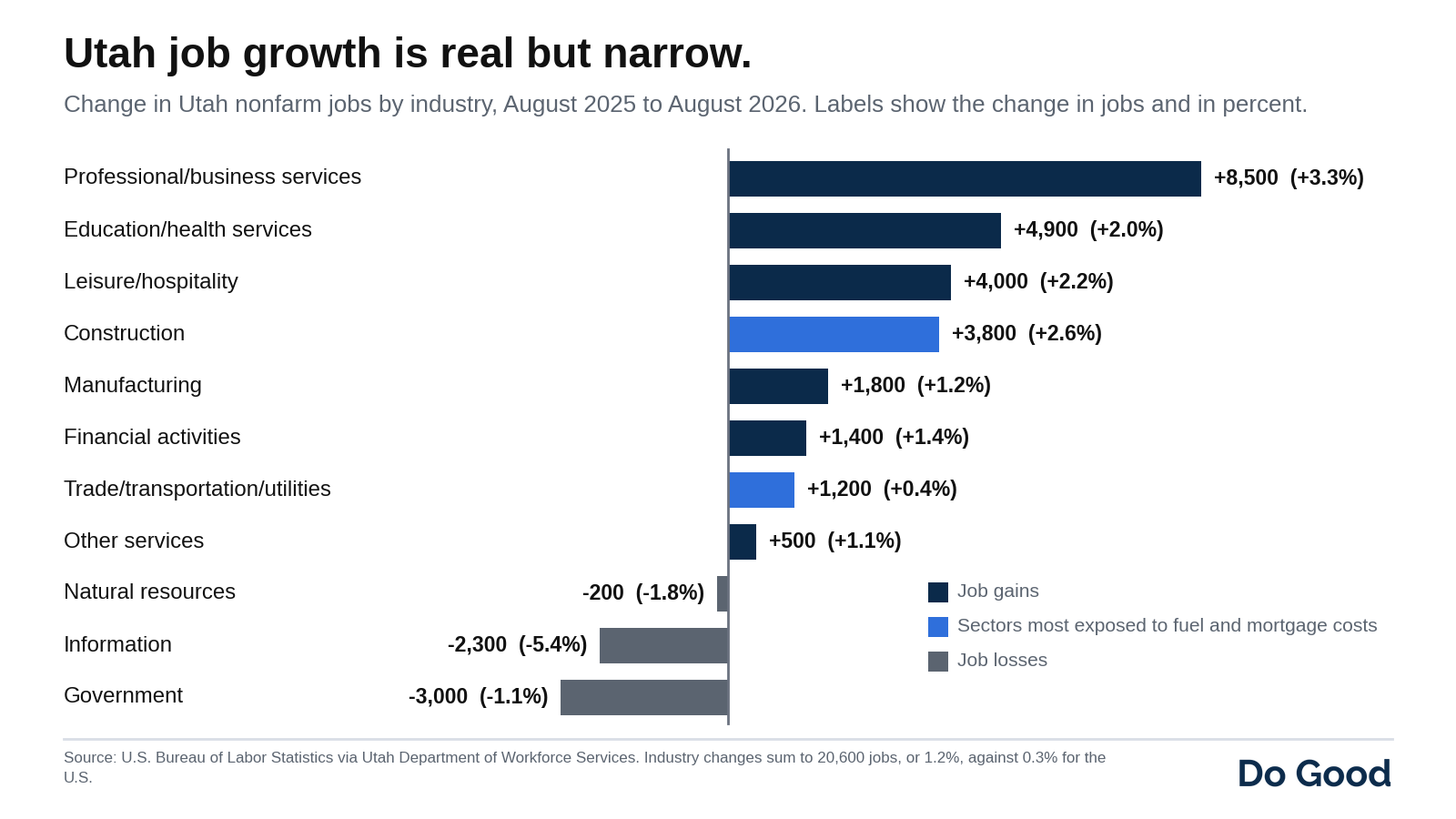
The state added roughly 20,600 jobs over the past year, employment grew 1.2%, and unemployment stood at 3.5%. Do Good’s September forecast puts the probability of a Utah recession over the next 12 months at 20%.
The Council’s discussion was somewhat more optimistic than the prior quarter—but the underlying picture is more complicated than the headline numbers suggest.
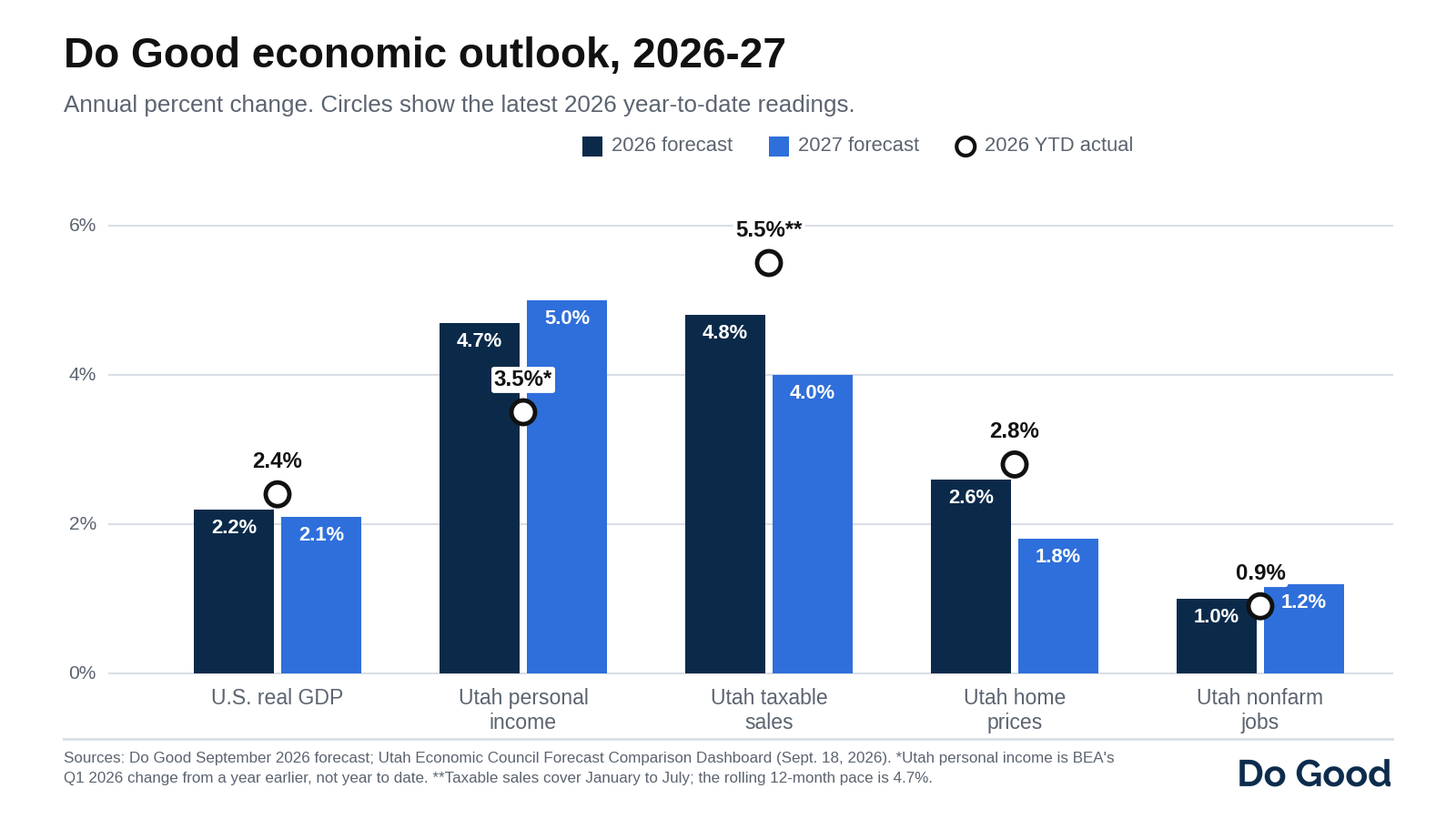
What Do Good is watching
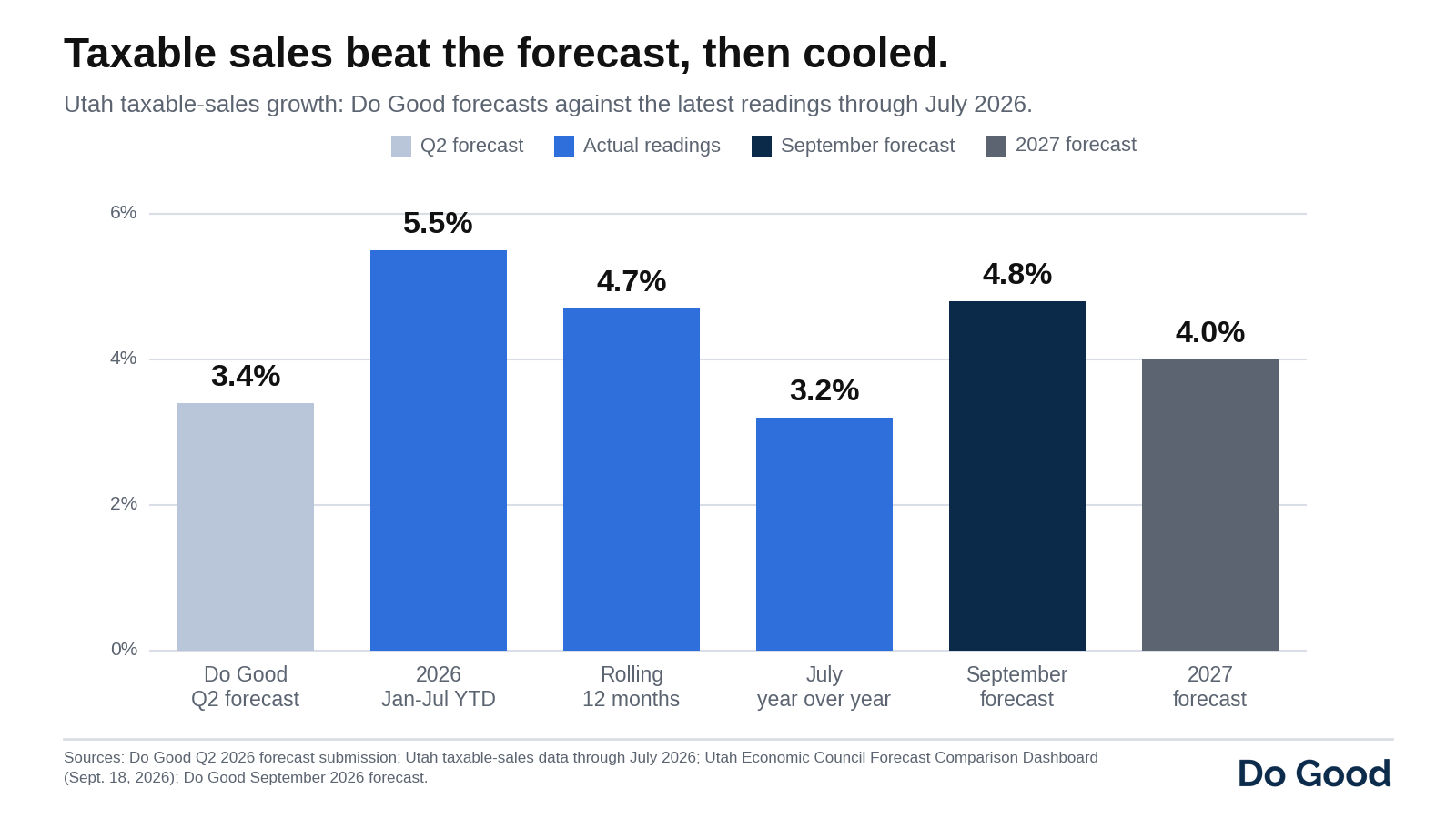
Taxable sales beat the forecast, then cooled.
Do Good expected 3.4% growth earlier this year. Sales have instead run about 5.5% year to date.
That was one of the biggest discussions at the Council meeting. The question is not whether spending is stronger—it clearly is—but why.
Inflation explains part of it. So does population growth. Business purchases count in taxable sales. And some of the spending may be increasingly concentrated among higher-income households.
The recent pace is also cooling: 4.7% over the past 12 months and 3.2% in July. Do Good’s revised 2026 forecast is 4.8%, closer to the steadier 12-month trend than the unusually strong start to the year.
Energy remains an inflation risk first.
The diesel shock is already showing up in freight costs, but the pass-through into broader consumer inflation has been much smaller.
Boston Fed research suggests an oil shock of the current magnitude is associated with a much larger inflation effect than employment effect. That is why Do Good continues to view the energy shock primarily as an inflation and interest-rate risk—not yet a recession signal.
Job growth is real, but it is not broad everywhere.
Utah payroll jobs are rising, but the labor force itself has been roughly flat for two years.
Prime-age participation has improved, while younger workers are having a more difficult time getting hired. The information sector remains more than 6,000 jobs below its peak, even as professional and business services continue to absorb workers.
That distinction matters. A 1.2% headline employment number can coexist with meaningful stress inside individual industries and age groups.
Housing may be the clearest example of the uneven economy.
Utah home prices are roughly flat: August prices were down about 0.4% from a year earlier, while still up about 1.4% year to date.
The rental market is even more divided. Single-family rents are still rising, while multifamily rents are roughly 8% below their 2023 peak, with concessions and vacancy concentrated around downtown apartments—particularly studios and one-bedroom units.
Yet apartment permits are still rising even though many projects do not pencil at current rates.
That is a useful reminder: Utah’s housing problem is increasingly about the capital stack, land costs and affordability, not a lack of underlying demand.
Housing affordability also came up as an economic-development issue. Employers are increasingly finding that recruiting talent into Utah is harder when prospective workers cannot afford the housing market.

State revenue also needs careful reading
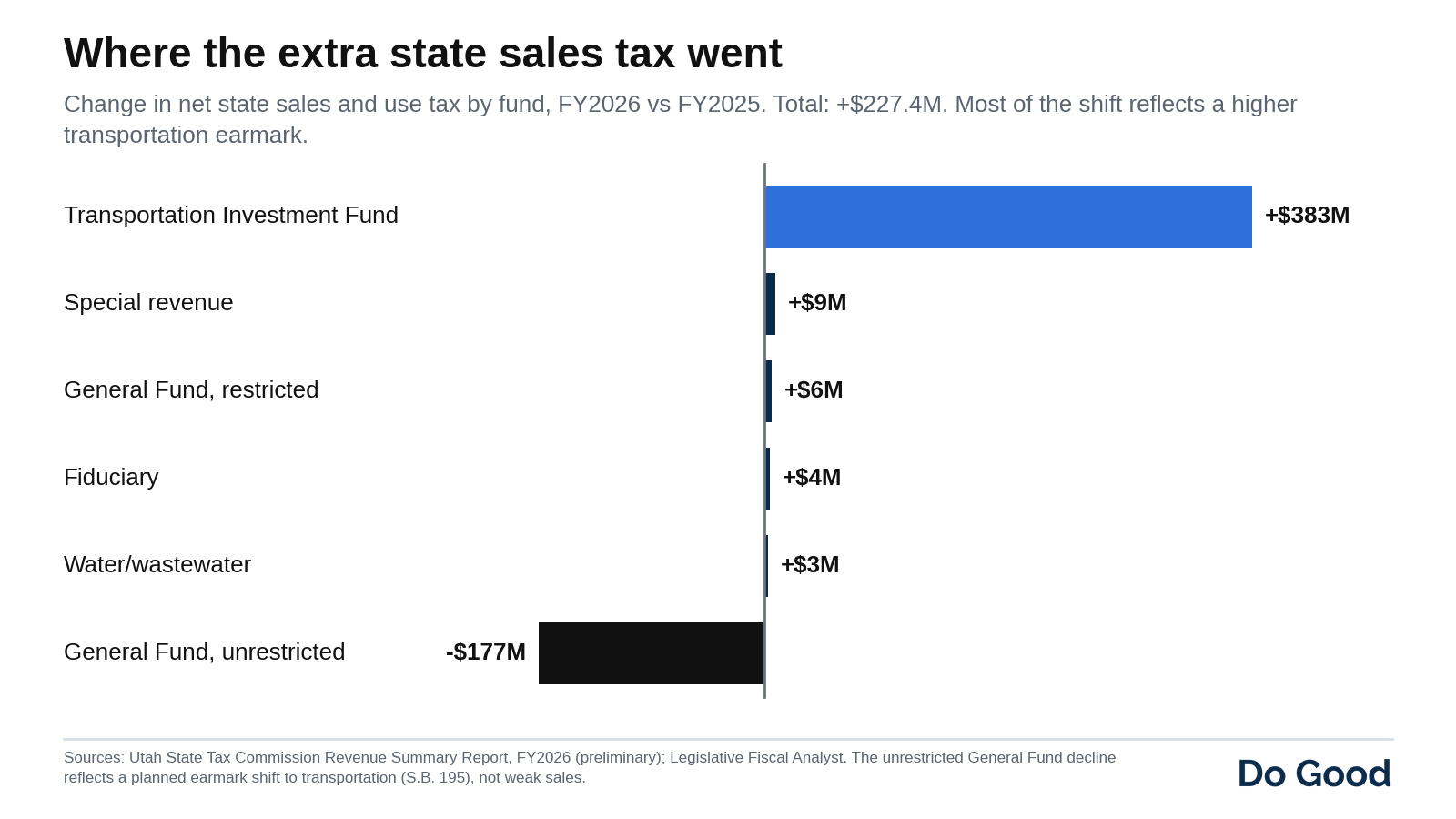
Utah sales-tax collections rose 4.9%, but the unrestricted General Fund share fell.
That does not mean sales weakened. Much of the difference reflects a planned shift of sales-tax revenue toward transportation.
At the same time, the state’s income-tax fund was essentially flat because stronger individual-income-tax collections were offset by a sharp decline in corporate income taxes.
That makes corporate collections an important watch item going forward, particularly because they are moving in the opposite direction from consumer and taxable-sales data.
How the forecast is holding up
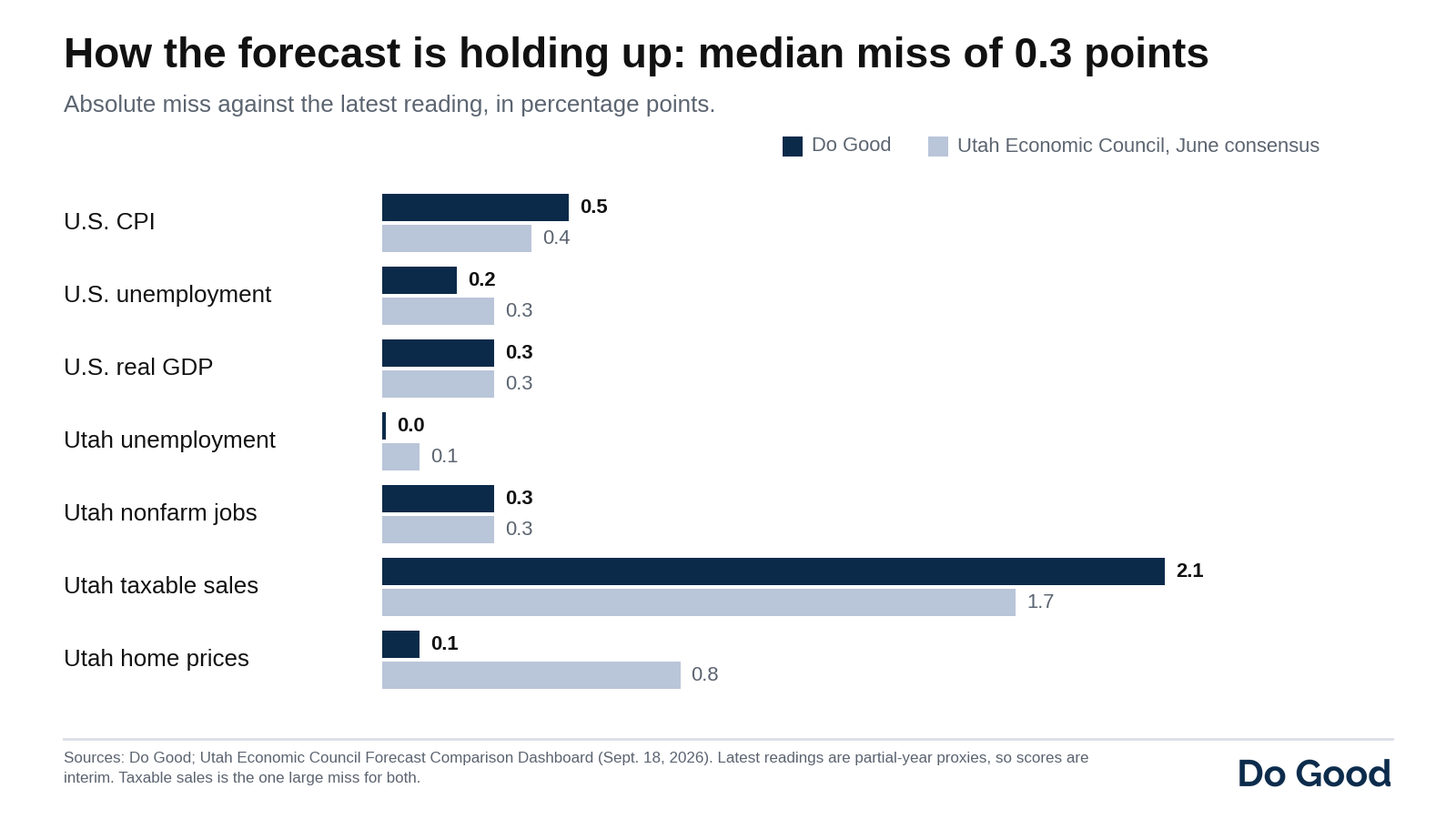
Do Good’s June forecast has held up well.
Across the seven indicators that can reasonably be scored so far, the median absolute miss is about 0.3 percentage points—roughly the same performance as the Utah Economic Council’s June consensus.
Most of the labor-market and housing calls were close.
The large miss was taxable sales.
That is useful information, not something to hide.
A forecast that cannot be wrong is not a forecast. It is a hope.
The discipline is in putting a number down, seeing where reality disagrees, and improving the next one.
What we are watching next
Four questions matter most:
Does Utah’s taxable-sales strength persist as monthly growth cools?
Why are corporate income-tax collections falling while household spending remains strong?
How much of the diesel and freight shock passes through into broader inflation?
How much pressure do higher long-term rates put on housing production, refinancing and development?
Do Good will continue updating the forecast as new data arrive.
Thank you to the Utah Economic Council and to everyone who brought a sharp pencil and an open mind.
[Read the full September 2026 Do Good Economic Forecast Fact Sheet.]